


Capturing the Stripes: Camera Trapping Tigers in Rainy Season

By Pu Perapong
Panthera Thailand Tiger and Leopard Research Project Officer

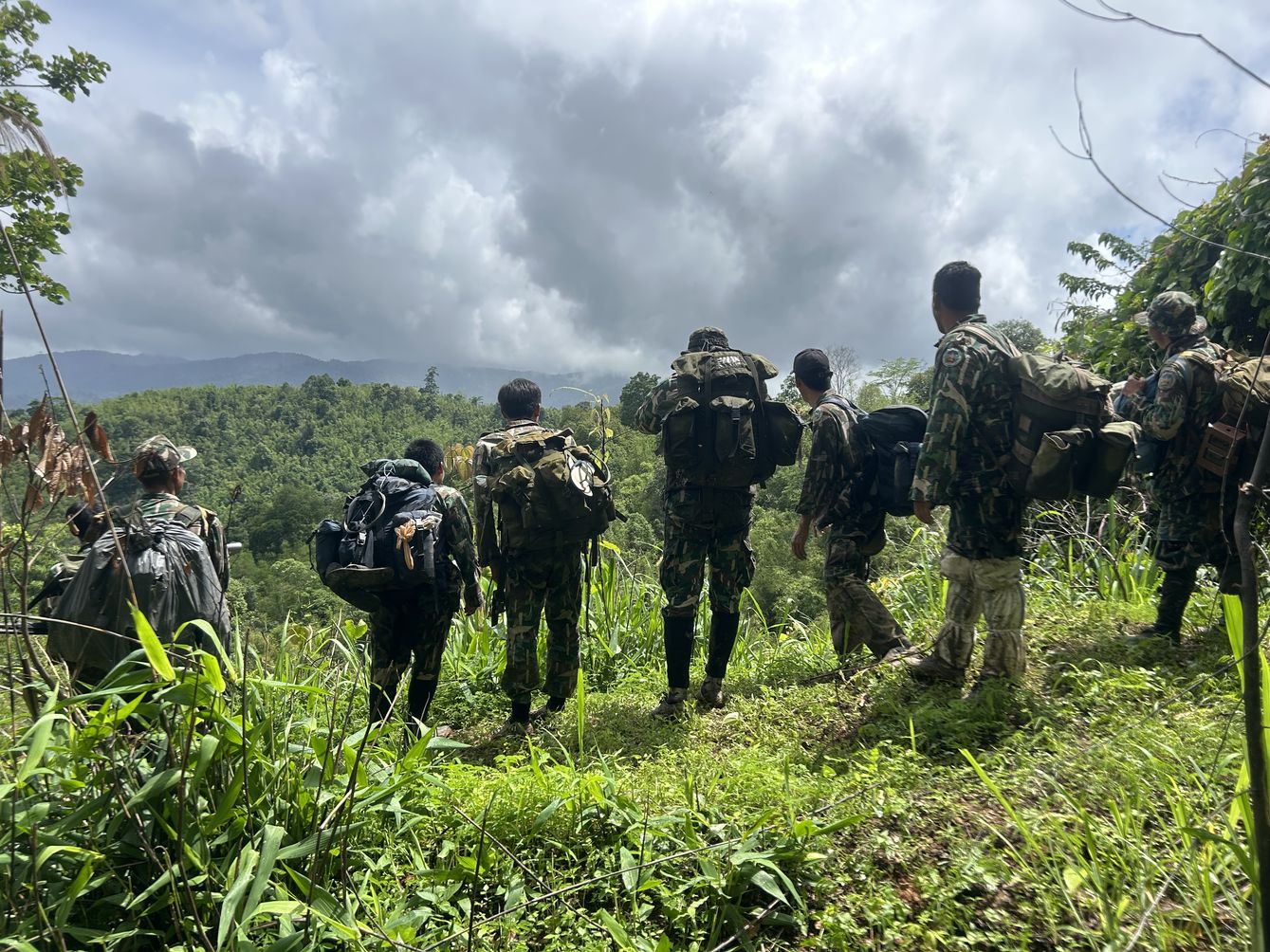
Rangers in the field
© Panthera Thailand

Tiger surveys are usually conducted during the dry season because access is easier and much safer. Wildfires, though, have become more severe in recent years. Last year, we couldn't deploy camera traps during the dry season because all resources, especially the rangers, were dedicated to fighting wildfires, which had become the highest priority. So, we had to carry out the survey during the rainy season instead. It was the most challenging time of the year to work in the forest.

Thailand's monsoon typically runs from mid-May to mid-October, with the heaviest rainfall arriving in August and September.

We began surveys immediately after the wildfire ended and worked to finish before the heaviest storms arrived.

Our landscape was Sai Yok National Park, Thailand, a part of the Southern Western Forest Complex (sWEFCOM), one of the last remaining tiger landscapes in Southeast Asia. Sai Yok National Park is unique because it is located directly along the Thailand-Myanmar border. The only way into its dense forest is on foot, trekking in from the eastern side. There is no helicopter support and no shortcuts.

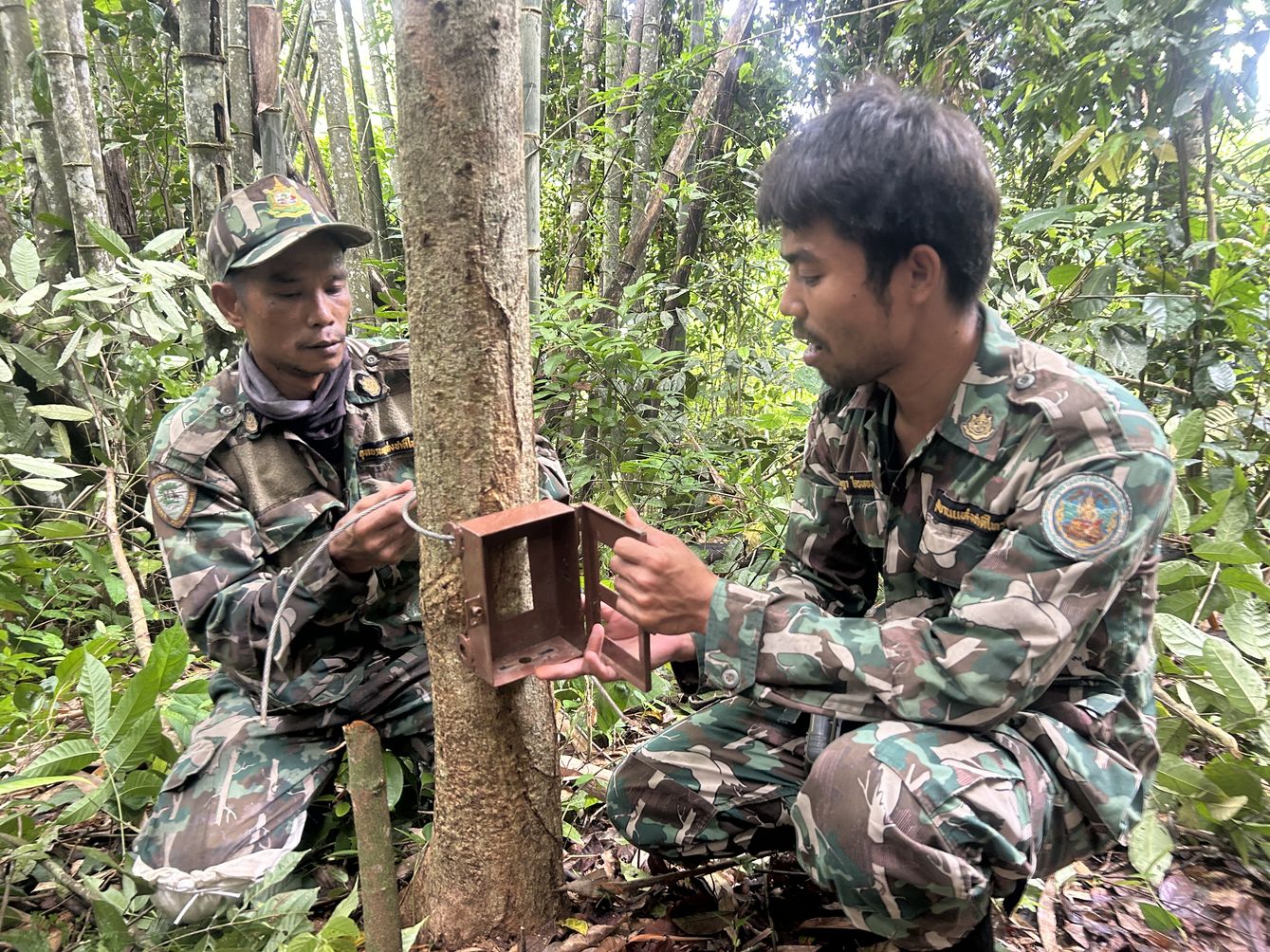
Setting up a camera trap
setting up a remote camera © Panthera thailand

In early June, we embarked on a nine-day survey. Twenty people set out on an 80-kilometer trek into the forest, carrying heavy backpacks and dozens of remote cameras in metal cases.

We crossed streams and climbed rugged mountains, pushing through terrain that challenged every step. The trip demanded physical endurance, teamwork, safety awareness and careful planning.  

We were suddenly charged by an elephant. It nearly caught one of the young rangers. Luckily, everyone was unharmed.

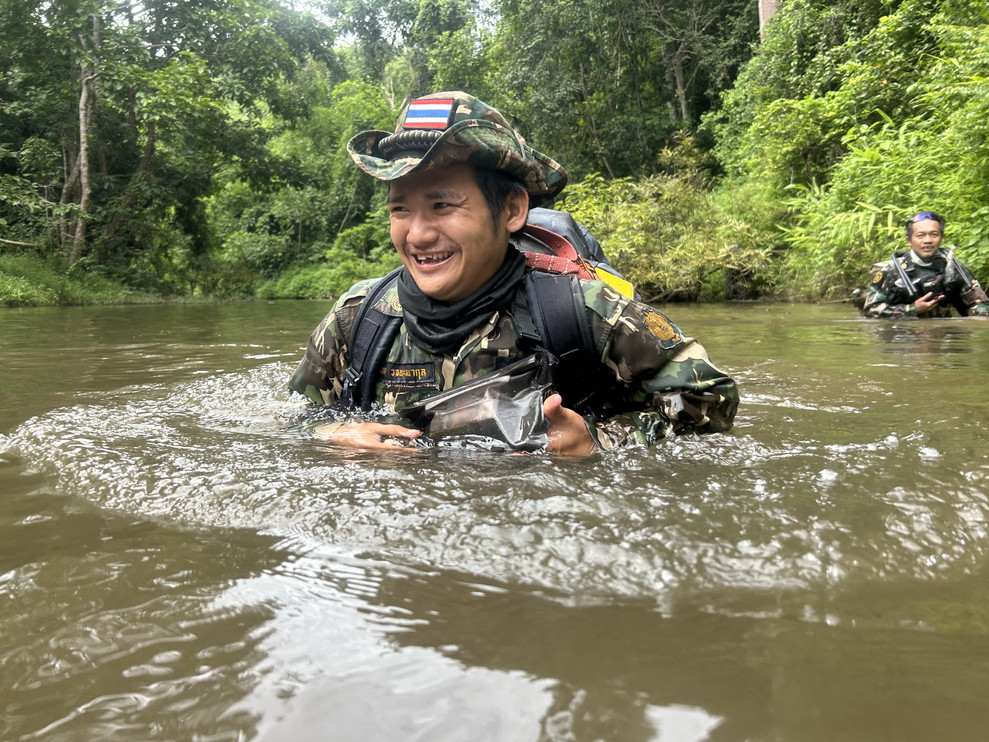
Though we had timed the survey to avoid the heaviest storms, it rained every day. Sai Yok National Park contains countless streams.  When they flooded and we couldn't walk,  we floated downstream using only a backpack. It looks exciting and fun, but it's dangerous as well.  

A ranger crossest chest-high water
floating down a flooded stream © pantehra thailand

All the roads were muddy and cut off by flooding, so our pickup plan had to change. A boat was considered instead. After floating downstream until late in the day, we reached the original pickup point. We still had to take a long walk to the new pickup point in the dark to reach the boat.

Despite its many challenges, the rainy season also brings a unique atmosphere. The forest turned lush, green and full of life. Wildlife becomes much more active, making it easier to find fresh sign.  

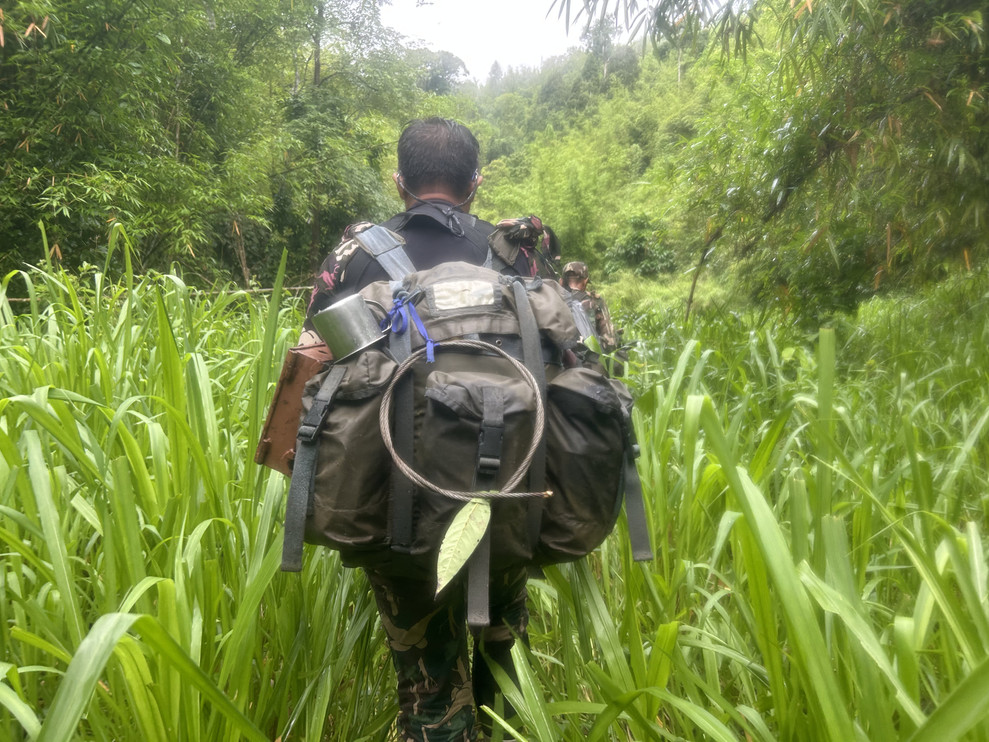
Ranger walking with heavy backpack
 tiger surveys demand physical endurance, teamwork and careful planning.  © pantehra thailand

During the survey, we encountered many species, including langur, sambar deer, gaur, jackal and elephant. Fresh wildcat tracks appeared regularly along muddy trails.  

And we never had to worry about being thirsty because water was everywhere.

Capturing the stripes is never easy. But every image reminds us why our work is worth it.