


How Community Partnerships Are Helping Bring the Arabian Leopard Back to Saudi Arabia

By Panthera

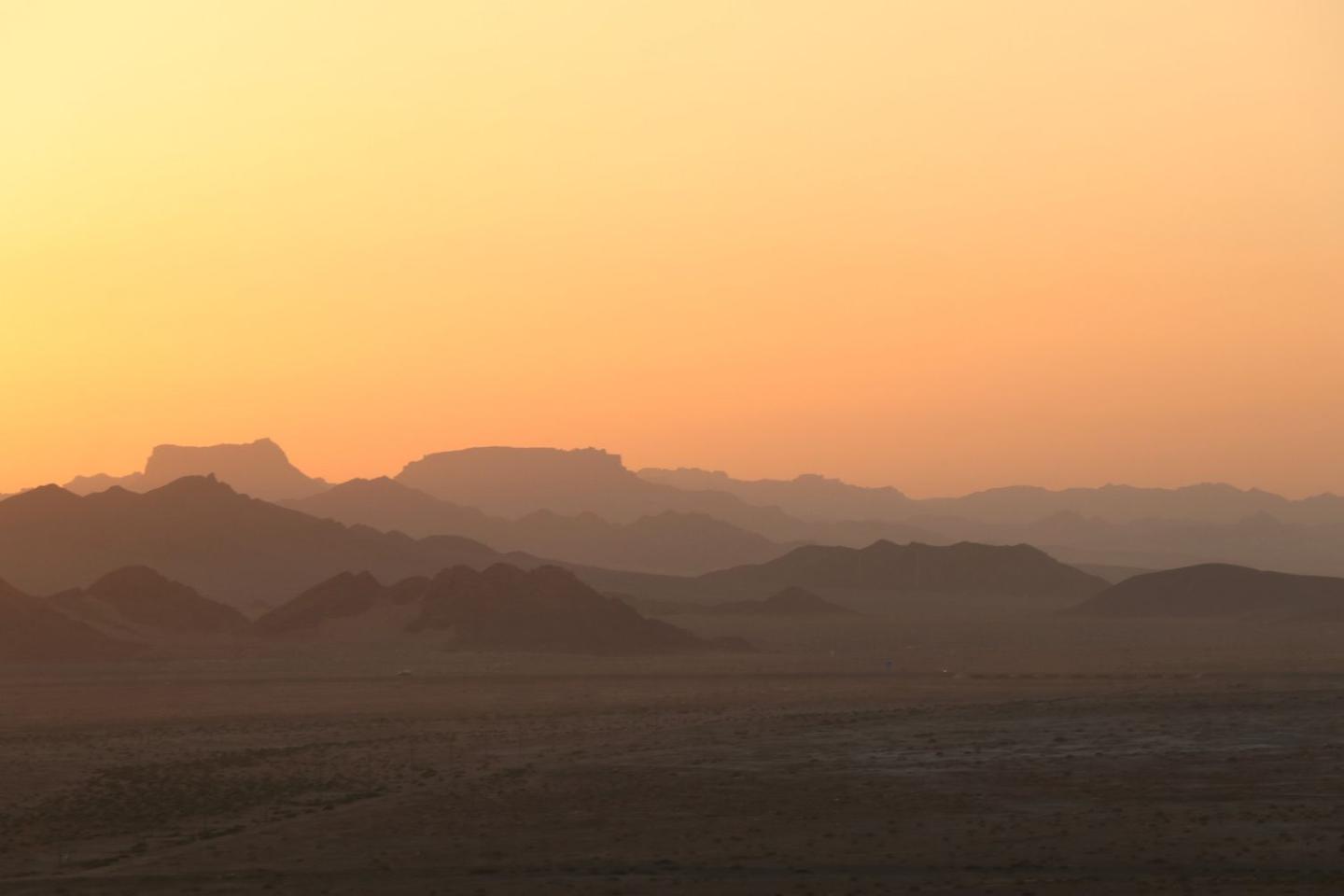
Sunrise over mountains in the ALULa landscape
© Keshab Gogoi/Panthera

Keshab Gogoi, Coordinator and Relationship Manager for Panthera's Arabian Leopard Initiative, remembers the first time he sat with village elders in AlUla, Saudi Arabia: they gathered around a fire, sharing qahwa — the traditional coffee served with local dates — as the night settled over the mountains. The elders spoke of the Critically Endangered Arabian leopard, a cat that had once moved through these landscapes, and is still pervasive in local stories and folklore. They weren't simply recounting history. They were grieving an absence.  

These intimate, unhurried conversations are the foundation of Panthera's work in AlUla. 

Sitting With the Sheikh: How Community Engagement Works on the Ground 

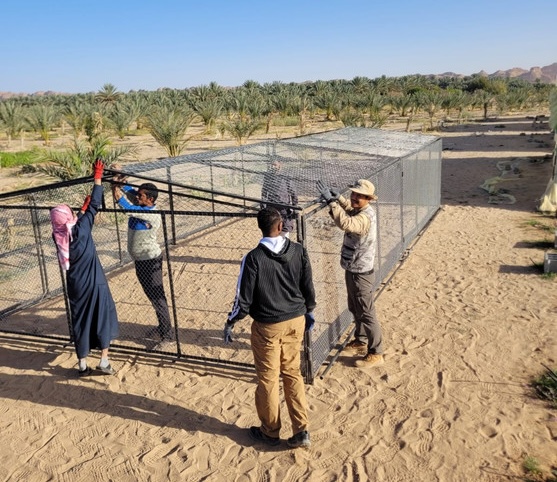
Panthera and local community members build predator-proof enclosures for livestock.
Panthera and local community members build predator-proof enclosures for livestock. © Panthera

The Arabian Leopard Initiative (ALI) is a science-based program focused on the recovery of the Arabian leopard in its native habitat through habitat restoration, conservation breeding and community engagement. Through the ALI, Panthera works with the Royal Commission for AlUla (RCU) toward an ambitious goal: restoring the Arabian leopard to a landscape it once roamed. Fewer than 120 Arabian leopards are estimated to survive in the wild today, and reintroducing a founding population to AlUla's protected reserves could be a turning point for the species.  

But a successful reintroduction depends on a relationship between conservation teams and the communities who have called this landscape home for generations based on mutual trust, shared goals and a common stake in what this place could become.

Before Panthera could build any of the 39 predator-proof livestock enclosures it would eventually co-design with community members, Panthera’s field team had to do the groundwork. That meant conducting preliminary surveys to understand where human-wildlife conflict was most acute, identifying the three pilot communities where they would test their approach and engaging with local leadership.

In each community, two local Community Liaison Officers would contact the Sheikh to organize community gatherings at a Majlis — a traditional community meeting hall — where Panthera and RCU would present their plans and, just as importantly, listen. The partnership, established in 2019, represents a landmark $20 million, decade-long commitment by RCU to leopard conservation in Saudi Arabia and around the world.

The Sheikh decides which farmers receive enclosures during the community meetings, identifying the farmers vulnerable to predator attacks. Community members identify the problems that need solving. Panthera provides the resources and the science; communities provide the knowledge, the relationships and ultimately the buy-in that makes any solution stick.

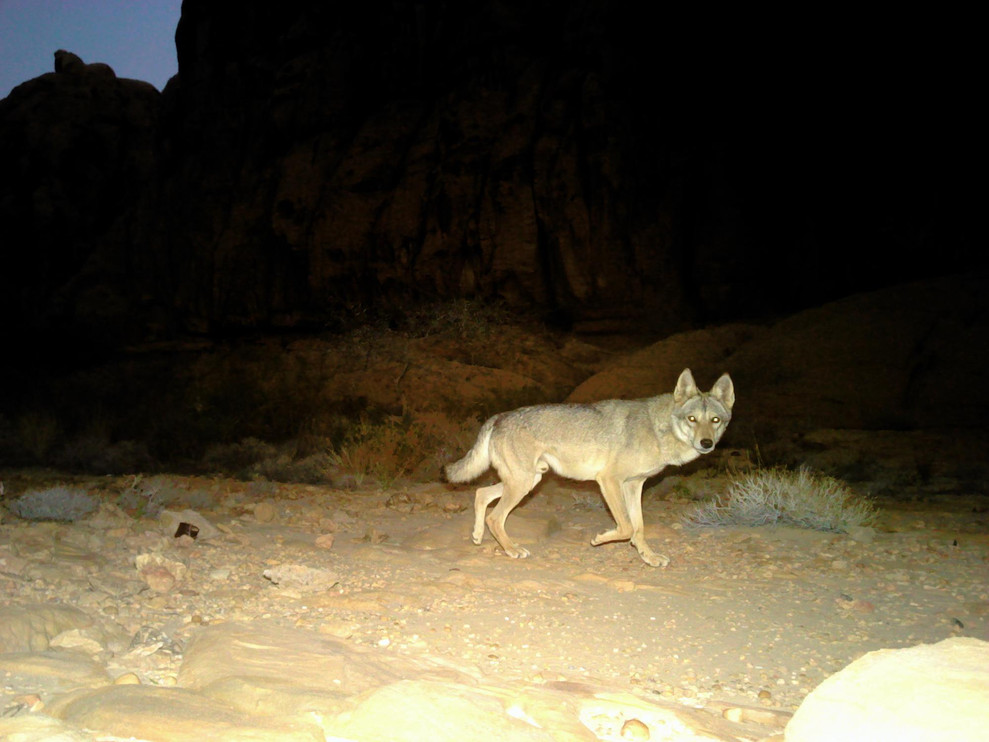
Once enclosures are built, Panthera monitors them using remote cameras to track the  visitation of wolves and feral dogs, the predators causing the most harm to livestock. The data informs the program; the program responds to the community. 

From Retaliation to Reporting 

Panthera monitors carnivores like Arabian wolves with remote cameras.
Panthera monitors carnivores like Arabian wolves with remote cameras. © Panthera

In recent years, there have been no reports of predators killed by community members around the pilot sites — a significant shift from the human-wildlife conflict that was once commonplace. Instead, farmers now report when they encounter a predator. Each report is data that helps Panthera and RCU understand where conflict is occurring, respond quickly and refine their approach. 

Since 2019, we’ve engaged with more than 500 local farmers, built 39 predator-proof enclosures, and trained six Community Liaison Officers. The Community Liaison Officers are the first point of contact in their respective communities, maintain a good relationship with fellow community members, facilitate arranging community meetings, collect baseline data and respond to human-wildlife conflict situations. Follow-up surveys have confirmed positive changes in community attitudes, and monitoring data shows a significant reduction in livestock predation within the enclosures.  

The Landscape Remembers: Culture, Heritage and the Arabian Leopard 

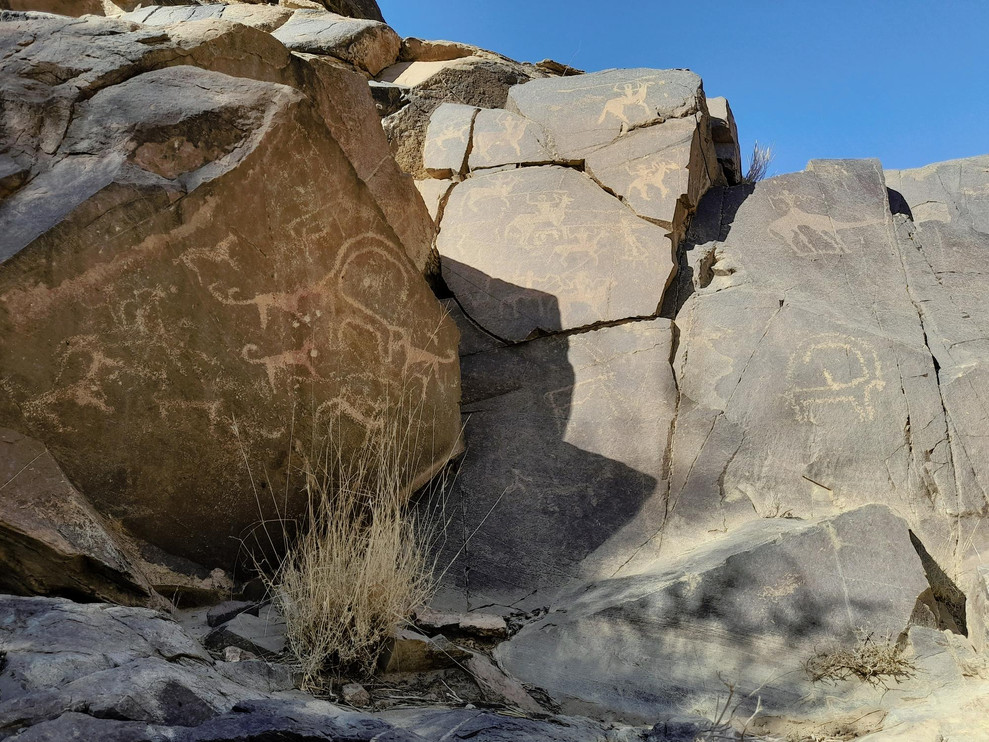
Petroglyphs depict humans, Arabian leopards and other wildlife in Saudi Arabia.
Petroglyphs depict humans, Arabian leopards and other wildlife in Saudi Arabia. © RCU/Panthera

What draws Gogoi to this work is harder to quantify than conflict mitigation metrics. Every landscape carries its own history, its own tensions, and its own relationship between people and wildlife — and no two situations are alike. Yet across that diversity, one truth recurs: how deeply a species can be woven into the cultural identity of a place, and how that connection, when carefully listened to and respected, can become a powerful force for conservation. In AlUla, Gogoi has found exactly that. The Arabian leopard is not just a conservation target here — it is a living thread in the memory, language and stories of the people who have lived in this landscape for generations.

The Arabian leopard may no longer roam these mountains, but it has never really left them. Petroglyphs etched into rock faces across the region depict the cat. The local word for leopard, Nimr or Nimrah, is still used to describe brave, charismatic Bedouin men and women.  

“When the elders tell stories of the Arabian leopard, their emotion comes through,” says Gogoi. “They carry the animal in their memory and their culture.” 

Conservation in this landscape is about restoring a heritage, not only an ecosystem. The communities of AlUla are the most essential partners in successful leopard recovery.  

Traditional knowledge held by local communities, willingly shared by the community members, brings vital insights that inform conservation efforts: Bedouin rangers and community members bring centuries of accumulated understanding of this landscape, from the behavior of the species to the subtleties of the region’s seasons, that deepens and enriches what contemporary science alone can reveal. 

A Foundation for Arabian Leopard Reintroduction 

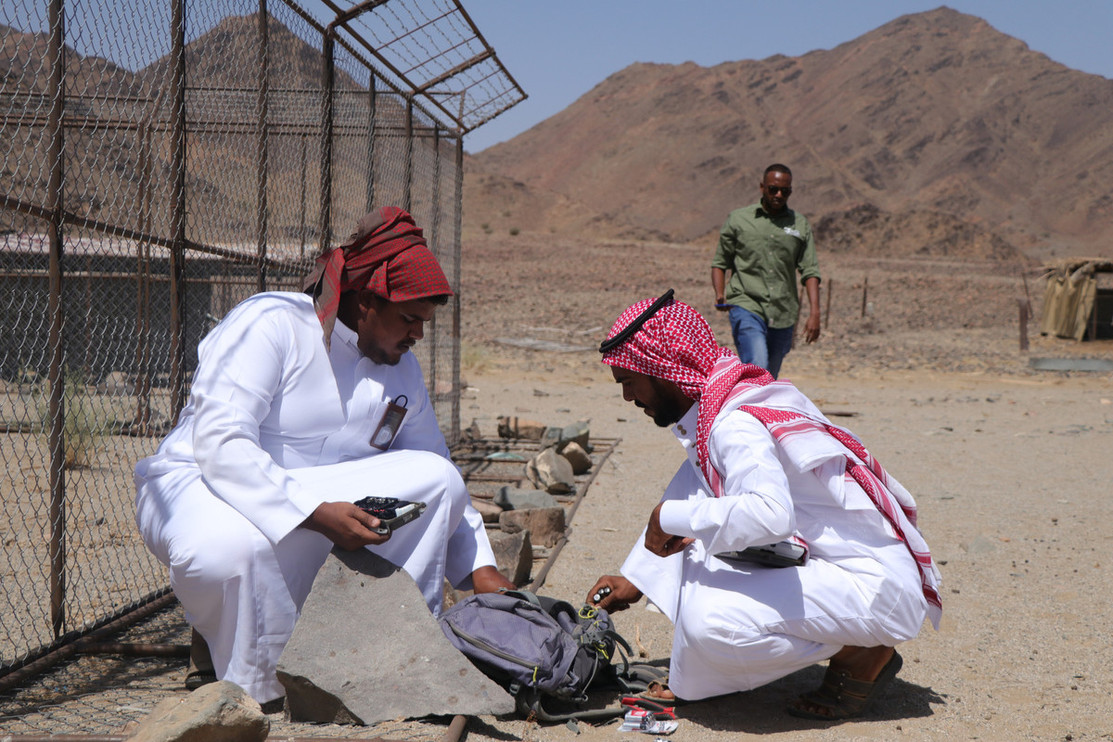
Community Liasion Officers deploy remote cameras at a predator-proof enclosure.
Community Liasion Officers deploy remote cameras at a predator-proof enclosure. © Keshab Gogoi/Panthera

“Local communities are an integral part of any ecosystem,” Gogoi says. “They have been the guardians of this landscape and its resources for thousands of years, long before modern ideas of conservation and coexistence came into place. Today, the scale of the challenge has changed. Human-driven pressures, habitat loss, conflict and overexploitation are pushing species toward extinction faster than ever before. In this context, the communities who live alongside iconic animals like the Arabian leopard are not peripheral to its conservation. Their knowledge, their cooperation and their beliefs are integral to ensure the successful and sustainable recovery of this charismatic species.”

The Arabian leopard has not yet returned to AlUla. But the communities whose cultural heritage is intertwined with this animal are helping pave the way. 

To learn more, read about Panthera’s and RCU’s efforts to reintroduce the Arabian leopard in AlUla. And follow along on Instagram as we share Panthera’s stories of community-led conservation around the world to discover how protecting wild cats has always depended on the people who live alongside these apex species.