


Cougars Keep Deer Off the Road — and Could Save Human Lives

By Panthera

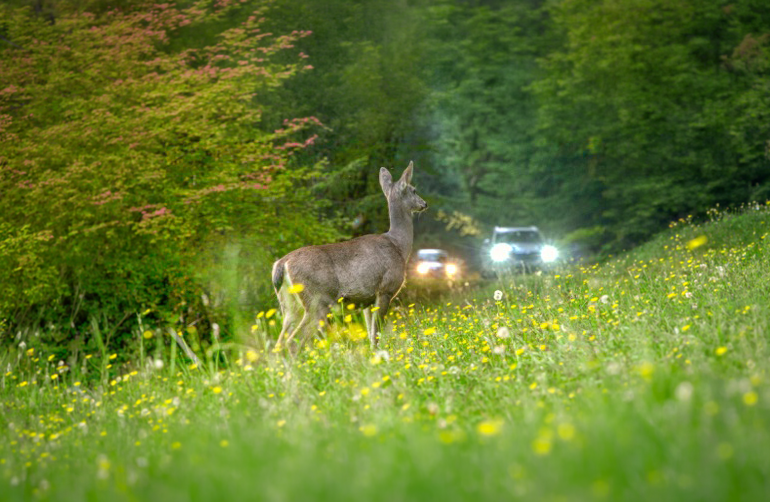
A black-tailed deer eyes a busy road in western Washington, contemplating when to cross.
© Joe Pontecorvo

​Deer kill more Americans every year than sharks, bears and mountain lions combined — and they strike when you least expect it, often at night along a lonely stretch of road. A new study from Panthera and Conservation Science Partnerspublished in Current Biology, finds that one carnivore may be the most effective solution. Where cougars roam, deer-vehicle collisions drop by as much as 76%. 

More than 1.5 million deer-vehicle collisions happen in the United States every year, killing roughly 200 people and costing over $10 billion in damages, insurance claims and road repairs. Cougars have been quietly driving those numbers down. 

The Landscape of Fear: How Cougars Shape Prey Behavior 

Cougars, also known as mountain lions or pumas, reduce deer-vehicle collisions by changing deer behavior — specifically where deer go and when. Cougars hunt most effectively along forest edges, where trees give way to open land — habitats that often parallel roads. In the presence of cougars, deer become more cautious around these edges, including those along roadways. 

The data show that deer in cougar territory were 15% less likely to use areas with dense road networks and 86% more likely to stay in remote habitat away from traffic. They also shifted when they moved, becoming more active during daylight hours when cougars hunt least, and reducing their nighttime forays that drive most collisions. 

Scientists call this the "landscape of fear." When prey animals reorganize their daily routines around the threat of being hunted, the effects reach far beyond the forest. 

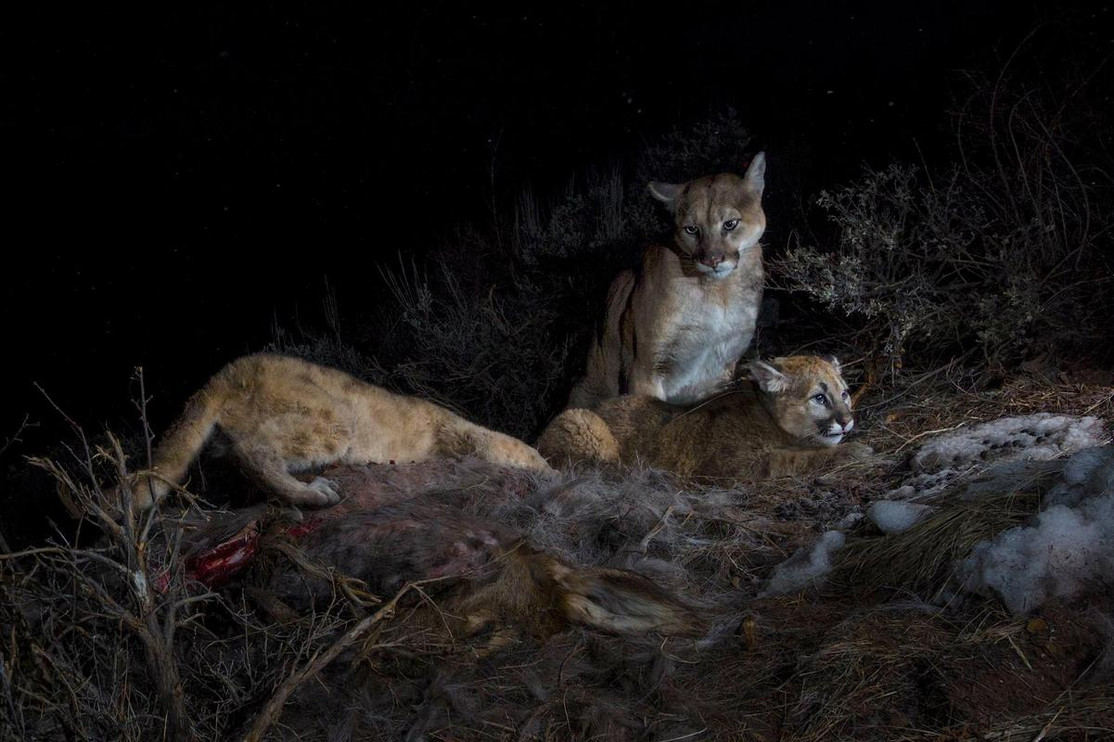
A cougar and her two kittens feed on a deer carcass at night.
A cougar and her two kittens feed on a deer carcass at night. © Steve Winter 

Five Years of Data from Washington's Olympic Peninsula 

To reach these findings, researchers paired five years of Washington State crash records with data from 503 camera traps and GPS collars on 59 cougars tracked through Panthera's Olympic Cougar Project, a long-term effort to monitor cougar populations, movement and survival on the Olympic Peninsula. 

Over those five years, deer and elk caused 97% of 953 recorded wildlife crashes, killing two people and injuring more than 80 — a local pattern that mirrors the national average. Where cougar activity was highest, collision odds dropped 67% and total collisions dropped 76% compared to areas where cougars were least active. It's the first study to use real field data connecting stable carnivore populations and prey behavior changes to fewer crashes on roads. 

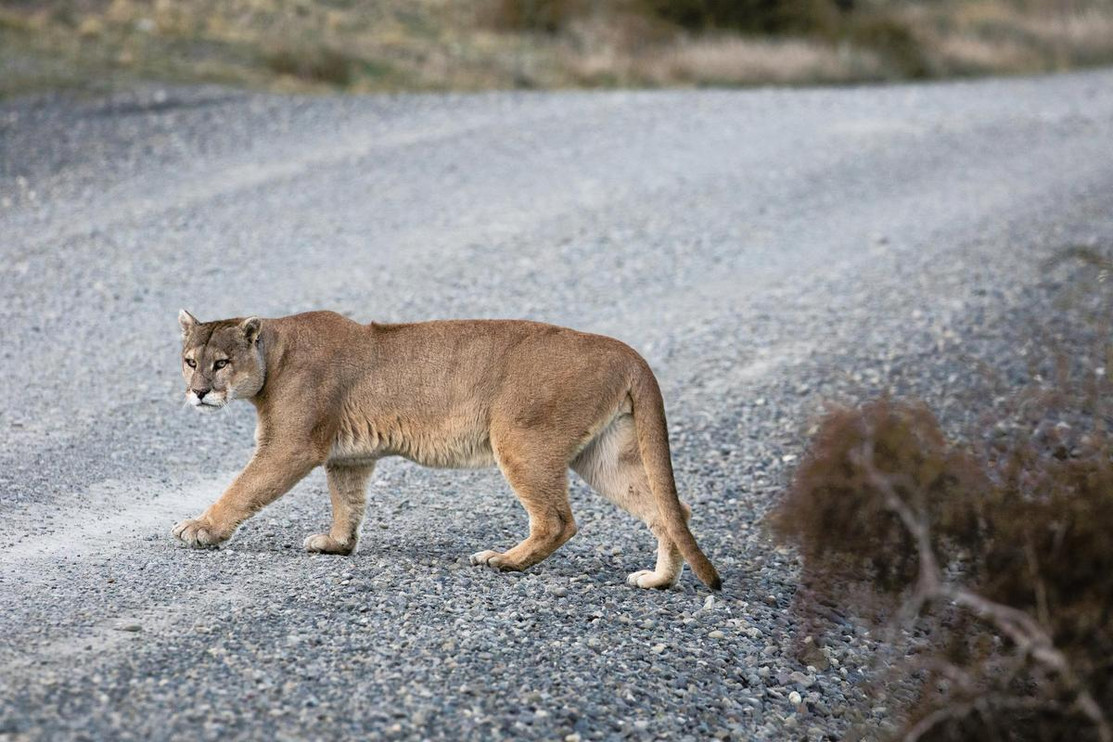
Cougars reduce deer-vehicle collisions by changing where deer go and when.
Cougars reduce deer-vehicle collisions by changing where deer go and when. © Nicolas Lagos  

Where Cougars Thrive, People Benefit Too 

This study measures what conservationists have long suspected: large carnivores benefit people directly. Cougars are a keystone species, meaning they shape the entire ecosystem around them. This study shows they also function like safety infrastructure, reducing crashes that kill people, raise insurance rates and strain state road budgets. 

Panthera's mission is to ensure the future of wild cats through science, policy and partnerships. Research like this shows why that work matters beyond the species itself. Healthy cougar populations protect ecosystems, support communities and save human lives. Conservation and human well-being aren't competing priorities. They're the same goal. 

Read the full study in Current Biology and learn more about Panthera's Olympic Cougar Project