


Seeing the Unseen: How PantheraCams Are Shaping Wild Cat Conservation

By Panthera

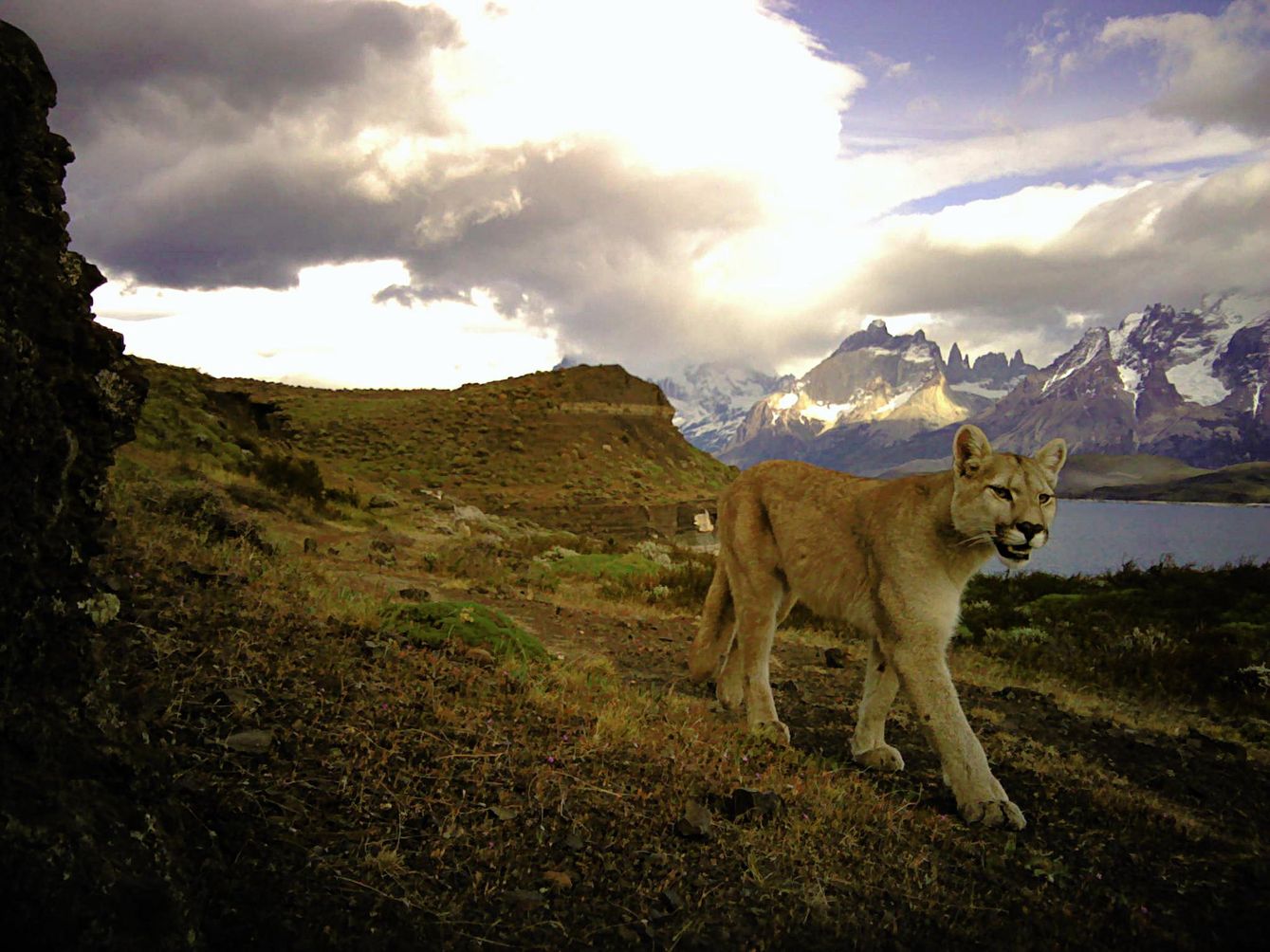
A puma walks in front of a mountain range and body of water
© Panthera

Wild cats are stealthy, wide-ranging and at home in some of the planet's most remote terrain. So how do we study animals that don't want to be found — without changing the way they behave?

Enter PantheraCams.

Eyes in the Wild: What Are Remote Cameras?

Across the world's most remote and critical wild cat habitats, from the cloud forests of Central America to the wetlands of Southeast Asia, Panthera deploys a global network of motion-activated remote cameras known as PantheraCams.

The cameras have been designed, developed and produced by Panthera's Conservation Technology team since 2008 specifically with wild cat research in mind. Also called trail cameras or game cameras, they silently take a photo when an animal passes by, capturing candid, undisturbed glimpses of wild cats in their natural habitats. PantheraCams — now in their eighth generation — have generated more than 26 million images across 25 countries and 466 datasets, documenting more than 470 species and 5,000 individual cats.

Deploying a global camera network demands as much science as it does endurance. Panthera's teams navigate some of the world's harshest environments and roughest terrain to position cameras where they'll matter most. This placement strategy requires deep local knowledge and rigorous analytical design to ensure the data holds up under scrutiny.

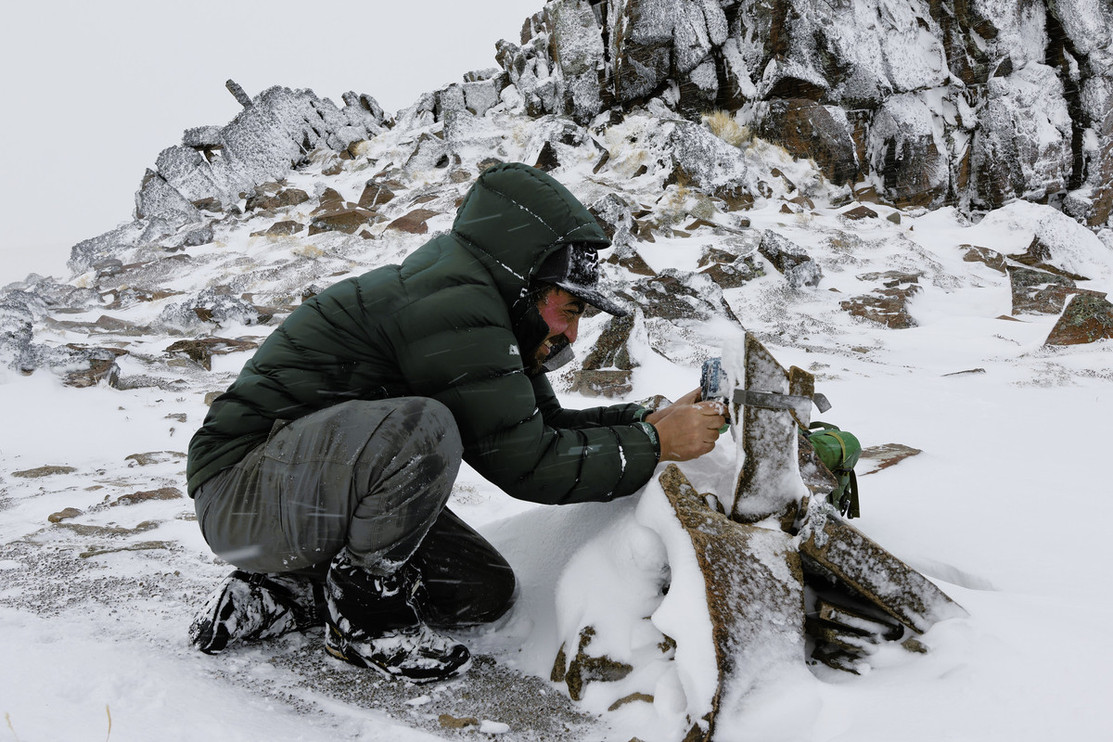
Panthera field staff check remote cameras in Patagonia, Chile.
Panthera field staff check remote cameras in Patagonia, Chile. © Panthera.

When the images come back — sometimes hundreds of thousands from a single study — our staff sort and analyze every frame, because a single photo of a rare cat can be months in the making, and worth every bit of the wait.

Why Are Remote Cameras So Valuable?

Wild cats are notoriously elusive. Some are nocturnal. Some are particularly shy. And some live in dense forests or high mountain terrain that humans can barely access. PantheraCams help us overcome these barriers to document wildlife and drive conservation strategy.

A jaguar's rosettes are as unique as a fingerprint. By tracking individual animals across years of camera data, Panthera scientists can assess whether populations are growing, declining or holding steady — information that directly informs where and how we intervene.


A post shared by Panthera (@pantheracats)

In February 2026, a PantheraCam in Honduras' Sierra del Merendón mountain range photographed a "cloud jaguar" at 2,200 meters above sea level — the highest elevation ever recorded for the species in the country and the first confirmed sighting there in a decade. That single image confirmed the protected corridor Panthera helped establish was still functioning.

If cameras reveal that a big cat is consistently avoiding a corridor, or that a carnivore is being displaced by a competitor, those findings shape habitat protection priorities, anti-poaching efforts and rewilding decisions into the future.

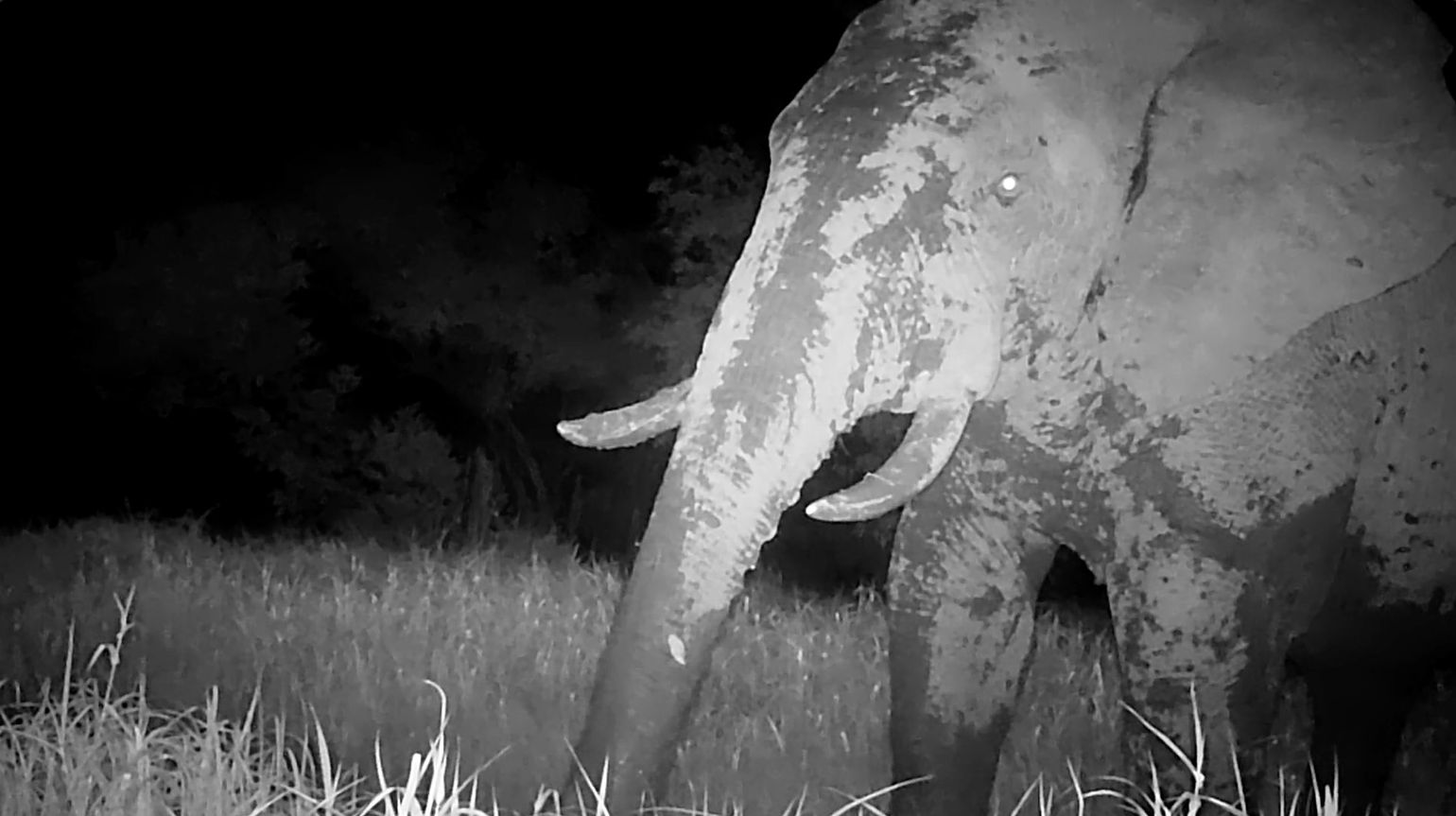
Remote camera data also captures behavior no field researcher could witness alone: territorial disputes. A mother teaching her cubs to hunt. In Senegal's Niokolo-Koba National Park, the first documented giant pangolin in nearly 25 years — and the latest sighting of the park's legendary "Ghost Elephant."

A lone male elephant photographed in Senegal's Niokolo Koba National Park
A lone male elephant photographed in Senegal's Niokolo Koba National Park. © Panthera & Senegal's National Parks Directorate (DPN)

Each of these moments adds a layer to our understanding of how species interact, how ecosystems function and what's at stake when wild cats disappear from a landscape.

What Happens After the Shutter Clicks

Deploying cameras is only half the work. Each year, Panthera's teams process millions of images collected from PantheraCam networks around the world — a data challenge that requires both cutting-edge technology and human expertise. Our team built and deployed the first AI species classifier trained on 13 million images.

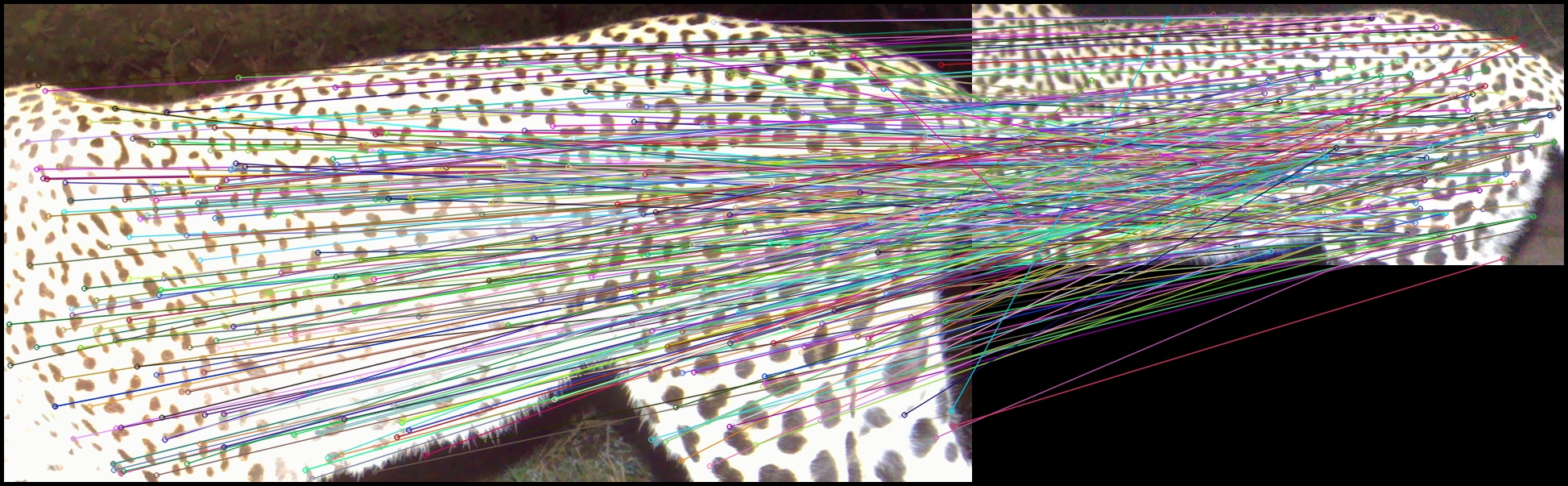
Panthera's own image analysis software uses automated pattern recognition to compare remote camera photos and identify individual animals by their unique markings — the spots on a leopard's coat, the rosettes on a jaguar, the stripes on a tiger. The software places two images side by side and draws connections between shared patterns, generating a confidence score that reflects how likely it is that both photos show the same animal. High-scoring matches are near-certain; lower scores flag comparisons that need a closer look.

Panthera software compares two images of leopards, signaling a likely match
A high-scoring comparison signals that two photos are likely of the same leopard. © Panthera.

But the technology doesn't work alone. Every comparison is manually reviewed and confirmed by a trained technician. That combination of automated pattern recognition and human judgment is what makes individual identification reliable at scale, allowing Panthera's teams to track a single animal across multiple camera stations, survey sites and years of data. Combined with powerful statistical models, this data allows us to estimate how many animals live in a given area — and by repeating surveys over time, to determine whether that number is increasing, decreasing or holding steady. It's what allows us to measure whether our conservation actions are actually working.

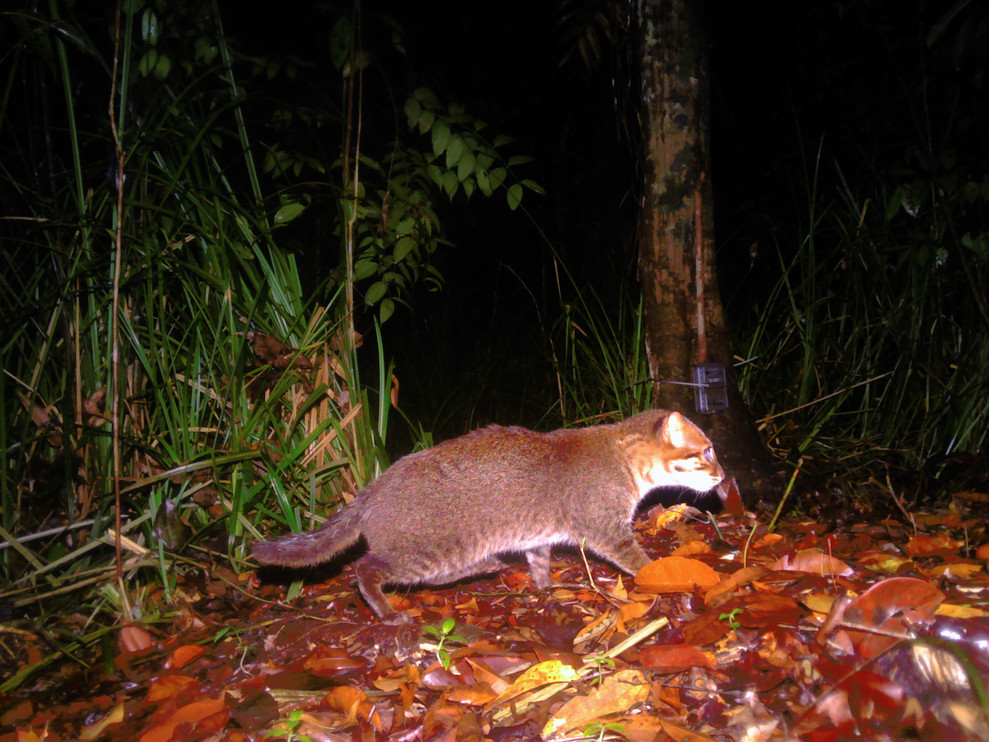
Sometimes that sustained effort produces results that rewrite what we thought we knew about a species entirely. In Thailand, camera trap surveys conducted in partnership with Panthera's team and the Department of National Parks confirmed flat-headed cats in the country for the first time in 29 years — including a female with her cub, evidence of active reproduction in a species once feared locally extinct.

A flat-headed cat photographed by a remote camera in Thailand
A flat-headed cat in Thailand. © DNP/Panthera Thailand.

Where habitat loss and human encroachment are accelerating, this kind of data doesn't just tell us what's there. It tells us what's at stake.

Want to See the Wild Through Our Lens?

Want to see more of what PantheraCams capture? Explore Panthera's conservation technology or follow along with the latest from our teams in the field.