

Caught on Camera: A New Jaguar in Central America's Most Fragile Corridor

By Panthera

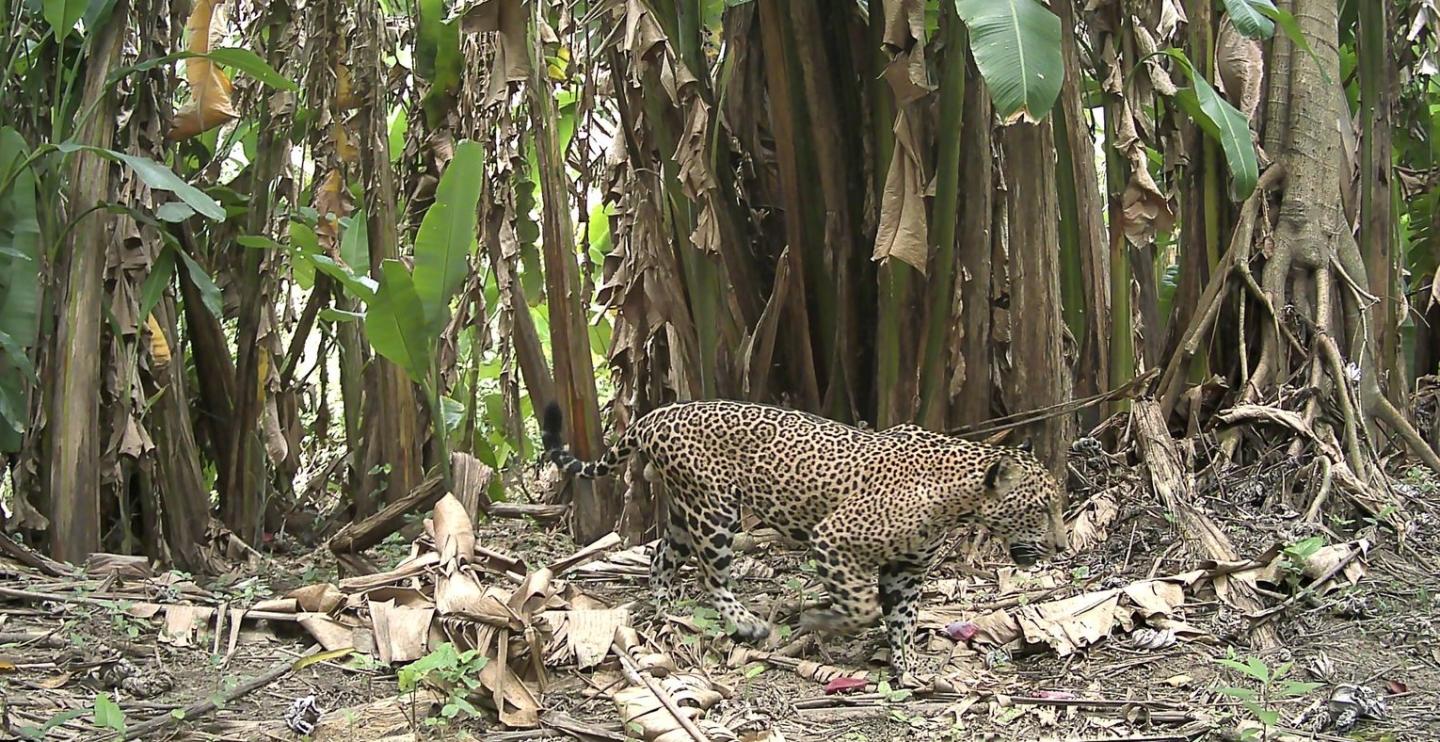
A healthy male jaguar in Guatemala
© Panthera

Earlier this year, a remote camera in Guatemala's Izabal region photographed a young adult male jaguar moving through thick green foliage. He appears healthy, unhurried and entirely at home. He is also standing in one of the most fragile places a jaguar can stand: the Binational Corridor linking Guatemala and Honduras. The field team has named him Hun-Kame, after a Maya lord from the underworld.

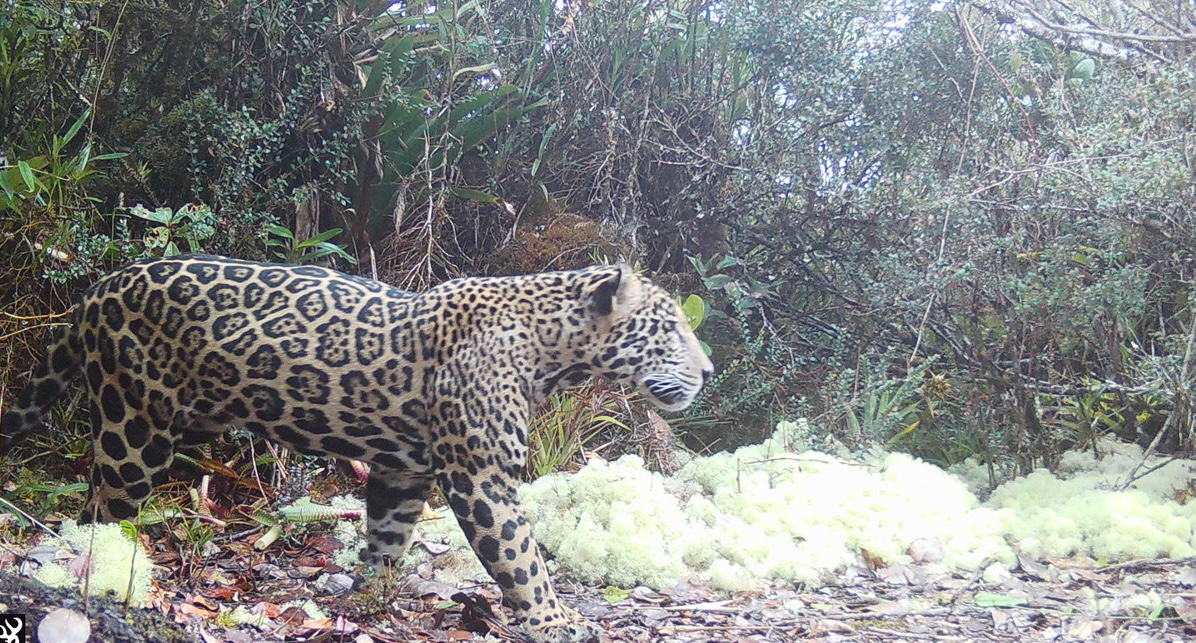
The record was captured during the project activities Panthera supports in Guatemala through Fundación para el Ecodesarrollo y la Conservación (FUNDAECO), and with the collaboration of Consejo Nacional de Áreas Protegidas (CONAP). This is the second jaguar documented in that Corridor this year. In February, a remote camera on the Honduran side photographed a "cloud jaguar" at 2,200 meters above sea level, the highest elevation ever recorded for the species in that country. That story traveled worldwide. 

A male "cloud jaguar" in Honduras
The cloud jaguar photographed in Honduras. © Panthera Honduras

These are not the same cat. Rosette patterns, as distinctive as fingerprints, confirm two different males in the same corridor in the same year, in strikingly different habitat: cloud forest in Honduras, and forest far from those high ridges in Guatemala's Caribbean region. 

For Wild Cats, Presence Is Not the Same as Passage 

Confirming jaguars within the corridor is meaningful on its own. It suggests these records may reflect dispersal — the long journeys young individuals make in search of territory, mates and prey. What it does not yet confirm is whether those journeys succeed. Are jaguars actually crossing between countries, or are they stalled on either side of a mosaic of land use — including a landscape filling up with roads, monoculture, and fences?

"Documenting this jaguar in Guatemala helps to not only make our work here visible but also demonstrates the importance of this area for biodiversity," says Bárbara Escobar Anleu, Panthera's Country Coordinator for Guatemala. "It also reinforces that cross-border collaboration matters. Working together is how we piece together a fuller picture of jaguar presence across the region."  

The answer matters because connected populations stay genetically healthy, while isolated ones become inbred and far more vulnerable to disappear. Jaguars have already lost nearly half their historic range and are listed as Near Threatened on the IUCN Red List of Threatened Species. Panthera's Jaguar Corridor Initiative works to keep the physical and genetic links across the species' 6 million square kilometers of range, aiming to protect and connect core populations from Mexico to Argentina. 

Where Jaguars and People Share a Corridor 

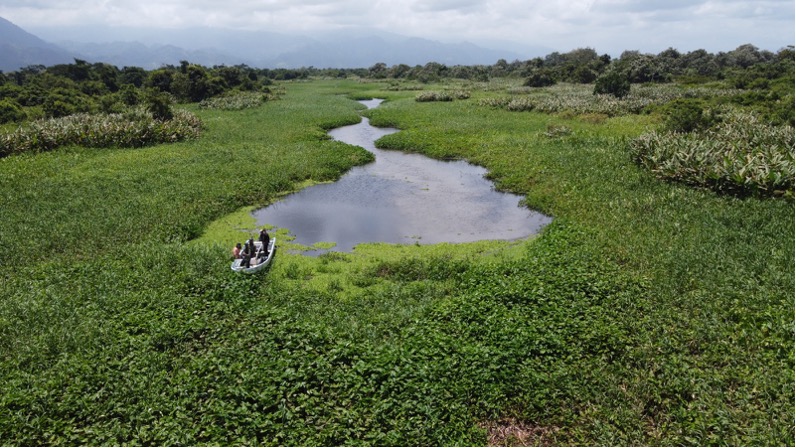
Panthera researchers in a boat near the Guatemala-Honduras border
Panthera researchers near the Guatemala-Honduras border. © Panthera Honduras 

This stretch cuts through one of the most human-pressured sections of jaguar range in Guatemala, home to dense rural communities, farms, extensive monocultures and ranch land. Illegal logging, poaching and expanding agriculture add to the strain. Conservation here only works if it works for people too. 

Local knowledge, remote cameras and work from different institutions such as CONAP, Wildlife Conservation Society (WCS), Defensores de la Naturaleza, FUNDAECO and Panthera have helped confirm that jaguars are still present in different parts of the country. Well beyond the Maya Forest, this majestic species persists in places like Sierra de las Minas and the Izabal region. Izabal is home to Garifuna, mestizo and Maya Q’eqchi’ communities, and conservation in this corridor depends on the people who live alongside these forests. Every one of those records exists because local people and institutions shared data in the field, across desks and across borders. 

This work also brings Panthera’s Guatemala and Honduras teams together on a single binational effort, drawing on our Jaguar Program, Counter Wildlife Crime Program and Applied Science Program. 

Guatemala's Jaguar Conservation Strategy 

Guatemala's updated National Jaguar Conservation Strategy, developed by CONAP with partners including Panthera, has been finalized and is now being officially presented. A new record from an under-monitored area gives that moment extra weight. 

Paisajes Sostenibles del Motagua, recently launched with support from the Global Environment Facility (GEF), the United Nations Development Programme (UNDP) and IUCN, is working to reconnect natural and productive landscapes across the Motagua River basin, with the jaguar as its flagship species. Its scope includes part of the Binational Corridor, and it advances nature-based solutions to several of the pressures jaguars face there. 

Meet Hun-Kame: A Jaguar Named for a Maya Lord of the Underworld

Conservation here plays out in a landscape where jaguars have carried meaning for millennia. The field team named this one Hun-Kame.

In the Popol Vuh, the foundational sacred narrative of the K’iche’ Maya people that long predates the Spanish colonization, Hun-Kame is one of the supreme lords of Xibalbá, the Maya underworld. His name translates as “One Death” or “First Death,” marking him as the principal ruler of that realm.

Among the houses Hun-Kame governed was Bálami-há, the House of Jaguars, described in the Popol Vuh as a place where jaguars prowled. The association runs deeper still. For the ancient Maya, the jaguar was the animal of the underworld — a creature of darkness and caves, the very entrances to Xibalbá, whose spotted coat was read as a map of the night sky and its stars. The Jaguar God of the Underworld, well documented in Classic Maya art and iconography, was understood as the nocturnal sun traveling through Xibalbá itself. The jaguar did not simply inhabit that world. It embodied it, standing for power over life, death and the night. 

Resident or Traveler: The Next Question for Guatemala's Jaguars 

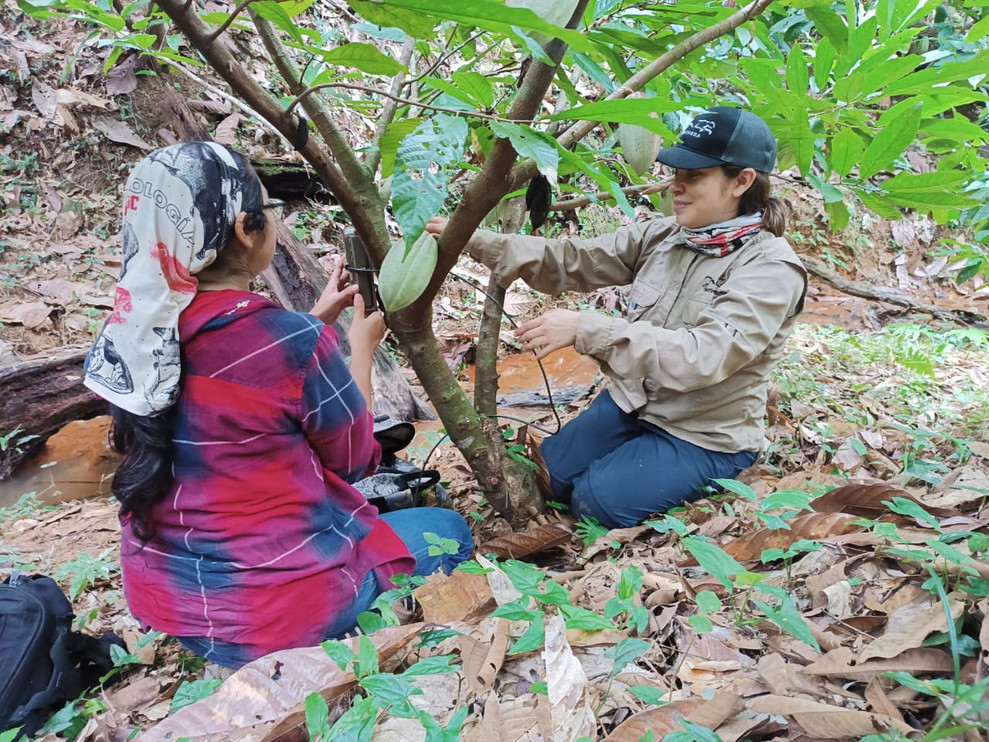
Bárbara Escobar Anleu and Isabel Martínez set up remote cameras in Guatemala.
Bárbara Escobar Anleu (right) and Isabel Martínez (left) set up remote cameras in Guatemala. © Panthera

We do not yet know whether Hun-Kame is a resident or a traveler passing through. The team is reviewing earlier remote camera data to find out, and either answer opens good questions about how far he ranges and where he came from.

On November 29, International Jaguar Day, Escobar Anleu will present part of this work in Guatemala City at a multi-institutional event hosted by Centro Cultural de España/AECID and WCS, in a talk titled "Jaguares del Caribe Guatemalteco" — Jaguars of the Guatemalan Caribbean. 

Jaguars are still present in the Corridor and sharing the landscape with various human communities in Izabal, such as the Maya Q’eqchi’ people, who are descendants of the people whose sacred narrative gave Hun-Kame his name. The jaguar’s significance in this landscape did not end with the Classic period. Ensuring safe passage for dispersing individuals requires coordination and collaboration across a suite of partners — including local communities, institutions and governments. 

Learn how Panthera works to protect jaguars and how you can help, and follow along on Instagram for more updates from the field.